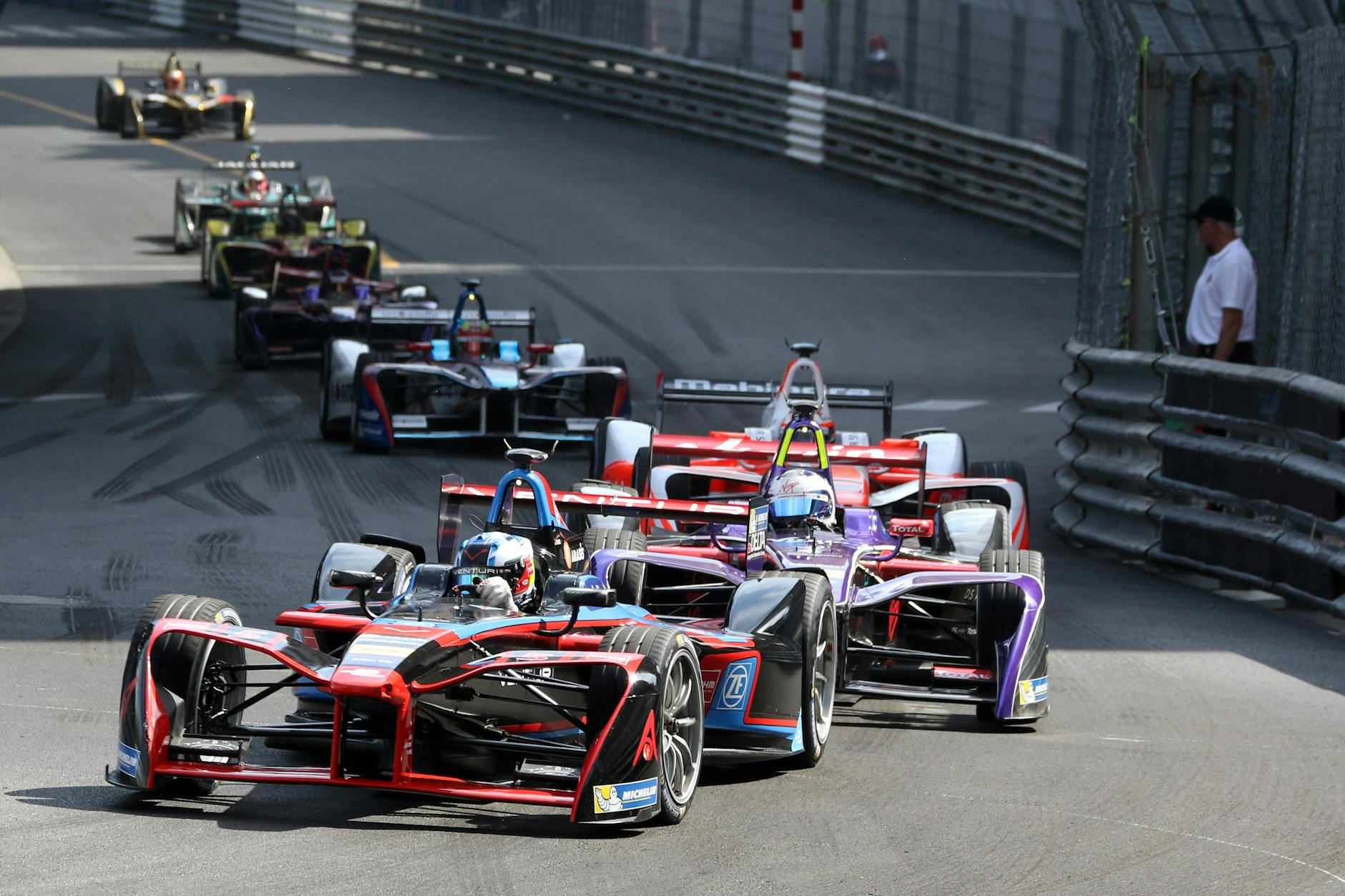
In the world of motorsport, engineering and marketing combine as sponsors, cities and drivers all compete for the glory of fame and money. For Formula 1, dubbed the “pinnacle of motorsport,”[1] this is no different – purpose-built, highly engineered cars emblazoned with dozens of sponsors, racing around the globe to rack up points and win the constructors’ or drivers’ championship. As it exploded in popularity thanks to the proliferation of the internet and television shows like “Drive to Survive,” F1’s audience has grown beyond its British origins, which now includes Southeast Asia. This does not just refer to its fans, however. To the countries themselves, the popularity of F1 represents a lucrative business opportunity, with the unique opportunity to host an F1 race able to rake in millions of dollars from eager fans and sponsors, boosting foreign tourism and local economies alike.
For its most recent foray, from 2024 to late 2025, the government of Thailand has approved a bid of a $1.2 billion (1.8 billion CAD) bid for the 2028-2032 seasons, becoming the third Southeast Asian venue of the motorsport, and the most expensive bid for F1 in history.[2] Cross-examining the tentative Thai Grand Prix with the successes and pitfalls of the Singapore and Malaysian Grand Prix reveals the complicated procedure of hosting a Grand Prix in one of the most economically and politically volatile regions in the world. The allure of Tourist income is offset by Thailand’s stagnating economy, which has allocated a large sum of money to expensive construction and promotion, veering away from infrastructure development. The institution of F1 as a permanent fixture is politically appealing, with the sheer timing of marketing, as well as the sport’s internationally recognized fandom, acting as a reputation booster for Thailand’s politicians[3]. The positive impact and excitement surrounding the introduction of F1 can overshadow Thailand’s sordid history of corruption. These dynamics intertwine, as first-world luxuries clash with third-world developmental priorities, revealing the irony that Formula One’s unaffordable costs effectively exclude the very people it was supposed to appeal to the most.
Hosting an F1 grand prix is not a straightforward process. Like an auction, countries themselves must approach Liberty Media, the mass media company that organizes F1 races, tickets, and promotions, with a “bid”, a contract that combines proof of income with a list of costs for the Grand Prix, which includes the hosting fee of tens of millions of dollars with a 5% yearly increase, plus the additional costs in building the circuit and hosting the event (security, staffing, track maintenance, etc).[4] Because F1 bids are usually in the nine-figure salary range, hosting F1 requires the coordination of national governments in confirming the allotted money, collaboration between the government and local sponsors for funding, and the cooperation of the public via public funding. This means that Formula One is an interplay of politics, economics, and culture.
Even if the bid is successful and funding is secured, the ensuing race is not guaranteed to break even. Since Liberty Media takes all of the sponsorship and broadcasting revenue that totals over a billion dollars,[5] countries have to make up the cost through ticket sales and local economic activity. In other words, Thailand is not just banking on the novelty of being the newest Grand Prix track, but its reputation as one of the world’s foremost tourist sites in order to make back its billion-dollar deposit.
Welcome to Thailand
When then-Prime Minister Shretta Thavisin announced the official bid for F1, and when his successor Patongthai Shinawatra continued to develop it, they were able to capitalize on both the modern national involvement in F1 and the city of Bangkok itself as an established tourist destination, culminating in a strong marketing appeal that translates into economic activity.
To examine the advantages and potential risks that Thailand runs in hosting an F1 race, it’s most apt to compare it to the two previous SEA Grand Prix: Malaysia, which ran from 1963–1965 and 2011–2017, and Singapore, which has been running since 2008.
Thailand’s greatest strength in comparison to Malaysia and Singapore is its marketing power generated from current drivers and the associated increase in Thai F1 viewership in the internet era. Malaysia has had only one F1 driver, Alex Yoong, who raced from 2001 to 02, and Singapore had none at all. Meanwhile, aside from local shows like Drive to Survive and YouTube videos on F1, 2026 is the first Formula season to have a Thai driver in three Formula tiers: Nandhavud Bhirombhakdi in F3, Tasanapol Inthraphuvisak in F2, and Alex Albon in F1. Albon, in particular, is most closely aligned with the promotional push for a Bangkok circuit, and the Williams driver is being featured alongside F1 president Stefano Domenicalli in negotiations with Patongthai Shinawatra to advance the proposal. Thai representation on these grids signifies an increased national participation in F1, both in racing and in viewership, which precludes a stronger economic incentive for sponsors and governments to invest in F1.
Another advantage of the Thai Grand Prix is centralizing Bangkok as the location for a circuit in order to alleviate costs and create a distinct visual image. Thailand does have a purpose-built motorsport race track, the Buriram International circuit, which is currently a part of the Motorcycle Grand Prix schedule. However, as seen with the case of the Sepang circuit in Malaysia, which is over 50 kilometers away from Kuala Lumpur, having a purpose-built track too far away from the economic center of a developing country drains further economic activity needed to pay the annual hosting fees and yearly maintenance. In contrast, both Bangkok and Singapore use street circuits. Bangkok plans to host the Grand Prix in Chatuchak,[6] an area best known for its lively weekend markets, vintage shopping malls, and overall being an area where tourists can easily grab a bite to eat or do some easy shopping amidst the races. Furthermore, it is immensely well-connected to the existing Bangkok public transit, making it easier for fans to travel there and connect with the rest of Bangkok. However, building a “street circuit” on the badly infrastructure roads of Chatuchak instead of a purpose-built F1 track comes with a steep cost of around 7 million dollars to design the circuit, which may potentially lead to further financial strain.[7]
Announcing the undertaking of the Thai Grand Prix amidst this interest, therefore, guarantees worldwide and national excitement, with Thailand able to reap the benefits of having native drivers that embolden national pride and locate their Grand Prix among one of the most iconic tourist settings in the country.
Economic and Political Implications
By far the most important factors to consider are economics and politics, specifically how the stability and decisions of the national government come to effect the Grand Prix, and how it can respond in the face of competition across the Southeast Asian region.
Regional Competition
The Singapore Grand Prix exists as an outlier because, alongside its historical status as the crucible of F1 races, it is supported by the strongest economy in Southeast Asia, one of the four “Asian Tigers”[8] that boasts high industrialization, fast economic growth, and the highest GDP per capita in the region at $99,000 ($135,000 CAD).[9] By splitting the yearly costs 60-40 between the government and private entities,[10] the Singapore Grand Prix can involve both local and foreign spending on the event, and has become a profitable event for the government, locals, and foreigners, able to generate over 1 billion dollars in revenue since its opening in 2008.[11]
In comparison to Singapore’s economic status as an “Asian Tiger”, Malaysia and Thailand are mostly considered as “tiger cubs”, categorized by slower but consistent economic growth. Thailand and other developing economies fall under this category due to their lower GDP per capita and lower urbanization, which has led to the growth of shadow economies that hinder their development.[12] This means their partnership in hosting the extraordinarily expensive Formula One represents a growth in international acclaim by associating themselves with a mega-event of developed first-world countries. Yet, at the same time, there is a higher gamble, where the tiger cubs rely on their F1 Circuit to make as much profit as possible. It is in this light that we see the timing of the event coming into play. Southeast Asia is a small region with relatively consistent weather of intense humidity and a torrid rainy season,[13] meaning that any races hosted there will be extremely physically demanding. This, combined with the high ticket costs and a spread-out calendar, means that most fans will only be able to buy one ticket for the region. If there are two or more concurrent Grand Prix in Southeast Asia, the other, more economically developed and tourist-attractive countries will likely extract more ticket sales to the detriment of the other. An example of this is in the competitive dynamic between Malaysia and Singapore circuits, where despite Malaysia’s Sepang circuit being the older track, the Singapore GP boasts the honor of being the first Asian street circuit, hosting F1’s inaugural night race,[14] and located in the beautiful Marina Bay, making it a more enticing choice for fans.
Despite making over 32 million dollars in revenue per race it would be competition and expenses that came to ruin the future of the Malaysian Grand Prix,[15] as Malaysia’s relatively weaker economy and ticket sales being lost to the competition of the Singapore Grand Prix led to lower turnout and an inability to pay the yearly fees of over ninety-seven million dollars,[16] leading the government to cancel the Grand Prix in 2017. To the Malaysian government, there had simply been no more value in draining their money, especially in competition with their better-funded neighbour.
Fortunately for Bangkok, Singapore’s current contract with F1 is to last until 2028,[17] meaning that there will eventually be an open spot for another Southeast Asian Grand Prix, in which the Thailand Grand Prix would be able to fill that opportunity, largely circumventing Malaysia’s problem of competition and becoming the premier tropical crucible attached to the bustling streets of Chatuchak, raising its chances to become economically profitable, though time will tell if that is truly the case.
Accessibility and Affordability for Thai Citizens
Despite the various issues associated with regional competition, the biggest problem with the Thai Grand Prix is not necessarily if their endeavor will get a return on its investment, but that the entire premise of the endeavor itself caters to the 1% and ignores the economic realities of Thailand’s developing economy. In the name of an attractive ‘geopolitical spectacle’, 1.2 billion dollars (1.6 billion CAD) from the Thai economy is being spent on a largely inaccessible event, which translates to little value among the average Thai citizens. It is no secret that Thailand is falling behind the rest of its Southeast Asian countries, with economic disparity, rising national debt and a mismanaged economy that stems from intense political corruption.[18] From 2024 to 2026, the Thai government has faced an innumerable number of political scandals from Thavisin’s constitutional violations to Shinawatra’s leaked calls with Cambodian leaders during the border conflict.[19][20] Combined with a laggard economy, the natural conclusion is that Thailand needs to restructure both its politics and its economy, the latter being a task that requires an exorbitant sum of money, where 1.2 billion dollars (1.6 billion CAD) approved by policymakers could be used to relieve the immense debt, which would then unlock the door to investment in growing industries.[21] But instead, that government-approved money is sunk into what is arguably one of the most expensive sports to enter both as a driver and as a host, with the offering of economic profit through tourism and by providing over 8000 jobs per year.[22] It is no surprise, then, that it is the government that most benefits from this endeavor, being able to cover up a history of government corruption with the veneer of entertainment.
Not even the entertainment of F1 itself can remedy the glaring reality that the average Thai citizen faces. When the minimum wage in Thailand is the exact cost of the lowest F1 tickets,[23][24] most citizens will be unable to afford the event, let alone be interested. The years of impeded traffic, a steadily worsening economy, and a government that only cares about optics and its perception by the elite and Western audience. The best case scenario is that Thailand gains a profit, which it can then use to alleviate the national debt. But as seen in the case of Malaysia, and in the words of the Thai Cabinet Secretariat (CS), the five-year outlay “may affect the country’s fiscal status in the future.”[25]
Conclusion
F1 is one of the largest public sports events in the world, with its history and prestige tempting any country that wishes to host. Because it is primarily catered to the rich and wealthy, there is no doubt that the Thailand Grand Prix will make a substantial amount of money from ticket sales and economic activity, with a predicted nine-figure income per year. But in the world of F1, profits of hundreds of millions of dollars are merely the norm, with those economically unprepared sooner or later reaping the consequences, as demonstrated through the failures of Malaysia’s Grand Prix. For Thailand, the F1 bid isn’t an analytical collaboration between government and sponsors like in Singapore, nor is there a moment of realization that the cost is too far gone like in Malaysia. It is a panem et circenses, an incredible show of wealth and luxury where policymakers place the hope of Thailand’s economy on a 1.2 billion dollar bet, where the common citizen will be caught in collateral damage, no matter the outcome.
Biew Biew Sakulwannadee is a Fourth Year student at the University of Toronto, specializing in History. They are a contributor in the Southeast Asia Section at Synergy and their research interests are in Southeast Asia’s involvement with the Cold War, and its intersections with politics and pop culture.
Bibliography
Chartchai Parasuk. “Thailand Must Manage Debt to Progress.” The Bangkok Post, January 22, 2026.
Cogan, Mark S. “Thailand’s New Soft Power Focus and the Makings of a Paradox.” Asian Affairs: An American Review 51, no. 2 (2024): 90–116.https://doi.org/10.1080/00927678.2024.2333684.
Cronin, Ben. “Formula 1 Delivers 15.8-Per-Cent Increase in Central Sponsorship Income.” SportBusiness, November 17, 2023.
Day, Dong-Ching. “Four Asian Tigers’ Political and Economic Development Revisited 1998–2017: From the Perspective of National Identity.” Asian Journal of Interdisciplinary Research 4, no. 4 (2021): 54–61.https://doi.org/10.54392/ajir2147.
Dodgins, Tony, Simon Arron, and Guenther Steiner. Formula One: The Pinnacle: The Pivotal Events That Made Formula 1 Motorsport’s Greatest Series. Ivy Press, 2022.
“How Much Do F1 Tickets Cost? Forecasted Starting Price at 11,000 Baht.” Thairath, December 12, 2025.
“How Much Do Circuits Pay to Host F1 Races? Inside the Multi-Million Dollar Fees Circuits Pay to Host a Formula 1 Grand Prix and Why Many Countries Gladly Foot the Bill.” By John Smith. Total Motorsport, June 26, 2025.https://www.total-motorsport.com/cost-to-host-f1-race/.
“How Thailand’s F1 Dreams: A Risky 40 Billion Baht Gamble?” The Nation, June 22, 2025.
International Committee of the Red Cross. Climate Fact Sheet: Asia Pacific. Geneva, 2021.
International Monetary Fund. World Economic Outlook: GDP per Capita, Current Prices. Washington, DC: International Monetary Fund, 2025.
Ministry of Trade and Industry. Factsheet on Formula 1 Singapore Grand Prix 2022 (In Support of Minister S Iswaran’s Doorstop Interview on the Sidelines of F1). Singapore, 2022.
Nguyen, Hoan Ngoc Le, Diep Van Nguyen, and Hoai Thanh Le. “Urbanization and the Shadow Economy of Asian Tiger Cub Economies.” Journal of Development and Integration, no. 77 (2024): 24–32.https://doi.org/10.61602/jdi.2024.77.04.
OECD. OECD Economic Surveys: Thailand 2025. Paris: OECD Publishing, 2025.https://doi.org/10.1787/426b9bc0-en.
“Paetongtarn on Defensive after Leak of Call with Hun Sen.” The Bangkok Post, June 18, 2025.
Panu Wongcha-um and Chayut Setboonsarng. “Thai Court Dismisses PM Srettha over Cabinet Appointment.” Reuters, August 14, 2024.
“Singapore Confirms 2008 Night Race.” Formula1.com, May 11, 2007.
“Thai Cabinet Approves $1.2 Billion Bid to Host Formula 1 Race in 2028.” Reuters, June 17, 2025.
“Thailand Approved to Host Formula One from 2028–2032 with Projected THB 41bn Budget.” The Nation, June 17, 2025.
Watanabe, Yasuhiro, Cassendra Gilbert, Mohd S. Aman, and James Zhang. “Attracting International Spectators to a Sport Event Held in Asia: The Case of Formula One Petronas Malaysia Grand Prix.” International Journal of Sports Marketing and Sponsorship 19, no. 2 (2018): 196–211.
“F1 Signs 7-Year Contract Extension with Singapore Grand Prix.” USA Today, January 27, 2022.
Footnotes
The name pinnacle of motorsport is difficult to trace, but has become enmeshed in the definition of F1. See: Tony Dodgins, Simon Arron, Guenther Steiner Formula One: The Pinnacle: The Pivotal Events That Made Formula 1 Motorsport’s Greatest Series (Ivy Press, 2022), 1-6. ↑
“Thai cabinet approves $1.2 billion bid to host Formula 1 race in 2028,” Reuters, June 17, 2025. ↑
This practice, of associating one’s government with a sporting event in order to conceal inner political corruption or turmoil, is called sportswashing, and is associated with the concept of soft power, which Thailand is notorious for leveraging in its history. See: Cogan, Mark S. “Thailand’s New Soft Power Focus and the Makings of a Paradox.” Asian Affairs: An American Review (Washington) 51, no. 2 (2024): 90–116. https://doi.org/10.1080/00927678.2024.2333684.↑
John Smith. “How much do circuits pay to host F1 races? Inside the multi-million dollar fees circuits pay to host a Formula 1 Grand Prix and why many countries gladly foot the bill,” Total Motorsport, June 26, 2025. https://www.total-motorsport.com/cost-to-host-f1-race/. ↑
Ben Cronin. . “Formula 1 delivers 15.8-per-cent increase in central sponsorship income,” SportBusiness, November 17, 2023. https://www.sportbusiness.com/news/formula-1-delivers-15-8-per-cent-increase-in-central-sponsorship-income. ↑
“Thailand approved to host Formula One from 2028–2032 with projected THB 41bn budget,” The Nation, June 17, 2025. https://www.nationthailand.com/news/general/40051367. ↑
Ibid. ↑
Dong-Ching Day.“Four Asian Tigers’ Political and Economic Development Revisited 1998-2017: From the Perspective of National Identity,” Asian Journal of Interdisciplinary Research 4 (4, 2021):54-61. https://doi.org/10.54392/ajir2147. ↑
International Monetary Fund. World Economic Outlook: GDP per capita, current prices (Washington, DC: International Monetary Fund, 2025). ↑
Gan Kim Yong. Written reply to PQ on costs of F1. Ministry of Trade and Industry. Singapore. 2 August, 2023. ↑
Ministry of Trade and Industry. Factsheet On Formula 1 Singapore Grand Prix 2022 (In Support Of Minister S Iswaran’s Doorstop Interview On The Sidelines Of F1). Singapore. 2022. p. 1. ↑
Nguyen, Hoan Ngoc Le, Diep Van Nguyen, and Hoai Thanh Le. “Urbanization and the Shadow Economy of Asian Tiger Cub Economies.” Journal of Development and Integration, no. 77 (2024): 24–32. https://doi.org/10.61602/jdi.2024.77.04. ↑
International Committee of the Red Cross. Climate Fact Sheet: Asia Pacific(Geneva, 2021), 4. ↑
“Singapore confirms 2008 night race,” Formula1.com. 11 May, 2007. ↑
Yasuhiro Watanabe, Cassendra Gilbert, Mohd S. Aman and James Zhang,. Attracting international spectators to a sport event held in Asia: The case of Formula One Petronas Malaysia Grand Prix. International Journal of Sports Marketing and Sponsorship, 196. ↑
Ibid, p. 211. ↑
“F1 signs 7-year contract extension with Singapore Grand Prix,” USA Today, January 27, 2022. ↑
OECD, OECD Economic Surveys: Thailand 2025 (Paris: OECD Publishing, 2025). https://doi.org/10.1787/426b9bc0-en. ↑
Panu Wongcha-um and Chayut Setboonsarng, “Thai court dismisses PM Srettha over cabinet appointment,” Reuters, August 14, 2024. ↑
“Paetongtarn on defensive after leak of call with Hun Sen,” The Bangkok Post, June 18, 2025. ↑
Chartchai Parasuk, “Thailand must manage debt to progress,” The Bangkok Post January 22, 2026. ↑
“Thailand approved to host Formula One,” The Nation. ↑
Per the Ministry of Labour, the minimum wage is around 300 baht per day, which exchanges into 11,000 baht per month. ↑
“How Much Do F1 Tickets Cost? Forecasted Starting Price at 11,000 Baht,” Thairath, December 12 2025. ↑
“Thailand’s F1 Dreams: A Risky 40 Billion Baht Gamble?,” The Nation, June 22, 2025. ↑