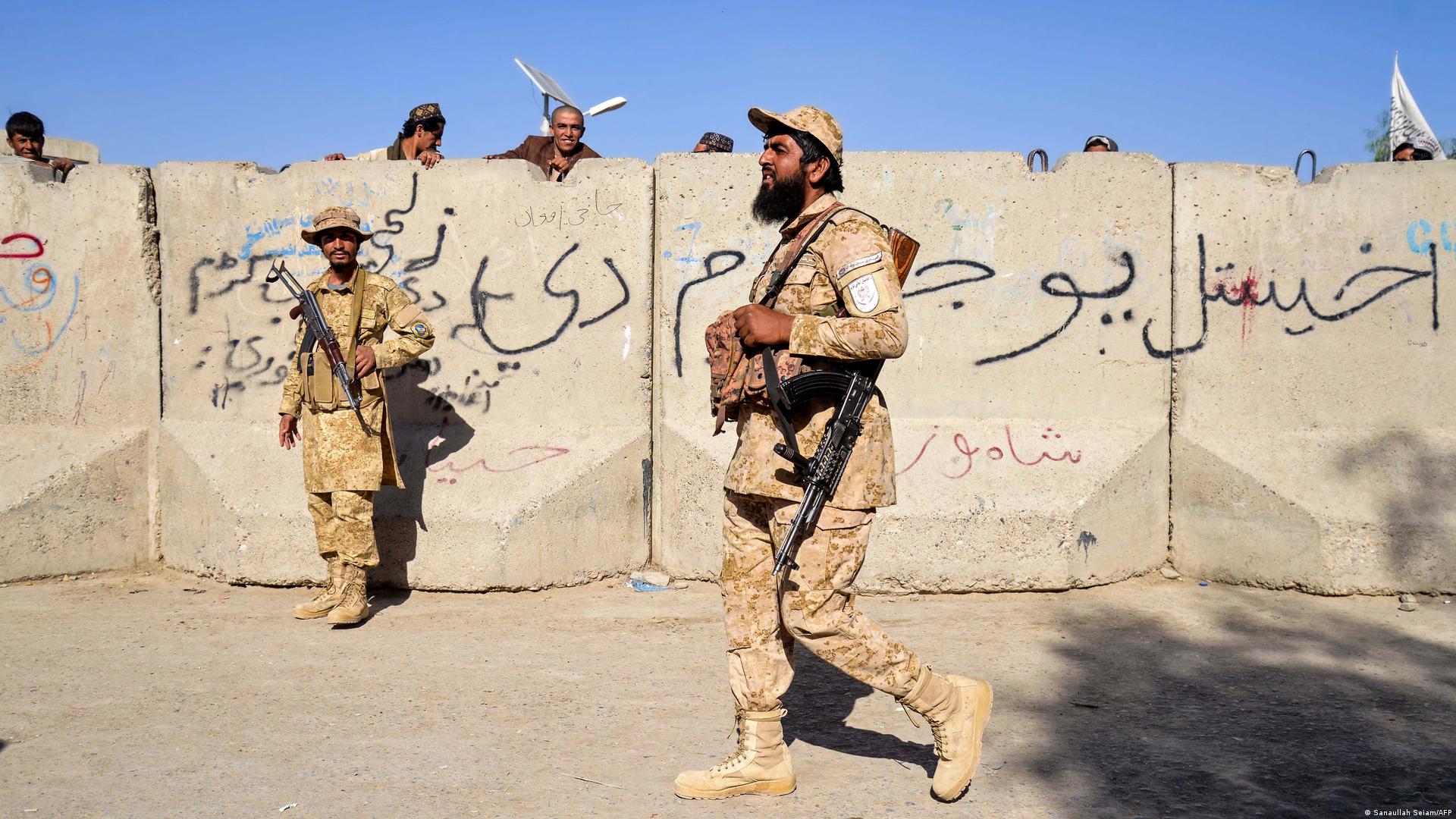
In October 2025, clashes broke out along the border between Afghanistan and Pakistan.[1] These came after Pakistan accused the Taliban of hosting and supporting the Tehreek-e-Taliban Pakistan (TTP), an internationally recognized terrorist organization. Pakistan followed its accusation with airstrikes into Afghanistan. The Taliban[2] claim that these airstrikes have killed innocent civilians, and deny that they are hosting any terror groups. These clashes come as the Pakistani government has been forcibly deporting Afghan refugees back to Afghanistan, many of whom have been born and raised in Pakistan.[3] Over the past two years, Pakistan has been dealing with an increase in terror attacks from groups such as the TTP and the Baloch Liberation Organization.[4]
Prior to the expulsion of Afghan refugees, Pakistan hosted the largest Afghan refugee population in the world.[5] Since late 2023, Pakistan has been detaining and expelling Afghan refugees, many of whom have never been to Afghanistan.[6] Pakistan claims that these actions are being taken to protect national security, asserting that many terrorists are undocumented Afghan nationals living in Pakistan.[7] In addition to mass deportations, Pakistan has created convoluted and expensive documentation laws for select Afghans who wish to continue to reside in Pakistan.[8] In the Waziristan bombings, for example, Pakistan claimed all four bombers were Afghan nationals.[9] Many Afghans have sought refuge in Pakistan since the start of the Soviet-Afghan war, and have changed the cultural fabric of the nation. The United Nations (UN) has expressed concern over the treatment of Afghan refugees by Pakistan and the mass deportations that are displacing people who have been in the nation for decades. Many refugees being sent back feel as though they are being used as pawns by the Pakistani government to pressure the Taliban to take stronger action in handling the TTP.[10] Due to the recent violence, the government has been ramping up deportations, and the UN estimates that 1.5 million Afghan refugees have left the country either voluntarily or involuntarily.[11]
According to a press statement released by the UN Assistance Mission to Afghanistan (UNAMA) on the 16th of October 2025, at least 18 civilians were killed by Pakistani airstrikes, all but one of the civilians were killed in the Spin Boldak region of the Afghan side of the Pakistan-Afghan border.[12] In Spin Boldak, 346 were injured, with around 15 injured in Helmand and other areas also due to Pakistani military forces.[13] On the 15th of October, the Pakistani military, through its communications wing, the Inter Services Public Relations (ISPR), claimed that 15-20 Afghan Taliban were killed in Spin Boldak after attempting to attack the Pakistani border outpost early on Wednesday morning (i.e. October 15th).[14] Before the ISPR released this statement, the Afghan Taliban spokesperson, Zabiullah Mujahid, posted on X. He claimed that the Taliban fighters were forced to retaliate after Pakistani attacks, and that 12 civilians were killed and 100 were injured.[15] Mujahid also claimed that there were many fatalities on the Pakistani side, as well as the capture of military posts and weapons.[16] This was a particularly deadly and tense clash between the two nations. It occurred along the Chaman/Spin Boldak crossing that links Afghanistan’s Kandahar province and Pakistan’s Balochistan province. However, the lack of clarity with regards to what is going on at the border and conflicting statements by the UNAMA, Taliban, and ISPR seem to show that facts are not easily accessible, which makes it difficult to provide aid and understand the conflict.
Alongside the accessibility of facts, the language used by the Inter-Services Public Relations (ISPR) in describing these clashes is also significant. The ISPR consistently refers to the Afghan Taliban and the TTP using securitized and delegitimizing terminology. For instance, the ISPRS has labelled the TTP as Fitna-al-Khwarij, which is a state-designated term intended to frame the group as religiously deviant and heretical.[17] As it refers to a sect of Islam that emerged in the 7th century and is widely considered to be radical and heretical by most Muslims. By calling the Taliban Fitna-al-Khwarij, ISPR and the Pakistani government are able to better delegitimize the Taliban’s religious credibility.
Furthermore, over the past two years, Pakistan has experienced a resurgence in non-state actor violence. Attacks by the TTP, alongside separatist violence by groups such as the BLA and sectarian outfits, have targeted security forces, infrastructure, and civilians. The number of attacks is now nearing pre-Operation Zarb-e-Azab levels.[18] Operation Zarb-e-Azab was an effort from 2014-2016, by Pakistan to reduce attacks by non-state actors specifically in the KPK province which borders Afghanistan. While it temporarily succeeded, the recent increase in attacks has heightened domestic pressure on the Pakistani government and military to demonstrate control and decisiveness, especially amid political instability and economic strain. Border clashes and airstrikes against the TTP in Afghanistan, therefore, function not only as counterterrorism measures, but also as signals of state authority to a domestic audience that is increasingly anxious about security.
Taken together, Pakistan’s internal security pressures, the ISPR’s securitized framing of the Taliban, and the absence of transparent and independently verifiable information along the border illustrate how the TTP has become central to Pakistan–Afghanistan relations. The group functions not only as a security threat, but as a point of diplomatic rupture and a justification for increasingly coercive policies. Rather than containing instability, this dynamic risks deepening militarization, humanitarian harm, and mistrust on both sides of the border, further entrenching the very conditions that allow militant violence to persist.
Bibliography
Hussain, Abid. “‘Illegal in Own Homes’: Afghan Refugees Caught in Pakistan-Taliban Tensions.” Al Jazeera, October 22, 2025. https://www.aljazeera.com/features/2025/10/22/pakistan-speeds-up-expulsion-of-afghan-refugees-amid-tensions-with-taliban.
Khan, Tahir. “Security Forces Repel Attack along Balochistan Border, 15-20 Afghan Taliban Killed: ISPR.” Dawn E-paper. Dawn, October 15, 2025. https://www.dawn.com/news/1949071.
South Asia Terrorism Portal. “Terrorism Update Details – Pakistan Rises to Second in Global Terrorism Index.” Satp.org. Institute for Conflict Management, March 6, 2025. https://www.satp.org/terrorism-update/pakistan-rises-to-second-in-global-terrorism-index.
“UNAMA Welcomes Afghanistan-Pakistan Ceasefire, Urges Protection of Civilians.” United Nations Assistance Mission in Afghanistan.. Kabul: United Nations, October 16, 2025. https://unama.unmissions.org/sites/default/files/16_october_2025_-_unama_welcomes_afghanistan-pakistan_ceasefire_urges_protection_of_civilians_english.pdf
- “UNAMA Welcomes Afghanistan-Pakistan Ceasefire, Urges Protection of Civilians,” United Nations Assistance Mission in Afghanistan (Kabul: United Nations, October 16, 2025), unama.unmissions.org/en/unama-welcomes-afghanistan-pakistan-ceasefire-urges-protection-civilians. ↑
- To differentiate between the Taliban that presently controls Afghanistan, and their offshoot the TTP, this article uses the Taliban as the Afghan Taliban interchangeably when referring to the regime that controls Afghanistan. ↑
- Abid Hussain, “‘Illegal in Own Homes’: Afghan Refugees Caught in Pakistan-Taliban Tensions,” Al Jazeera, October 22, 2025, https://www.aljazeera.com/features/2025/10/22/pakistan-speeds-up-expulsion-of-afghan-refugees-amid-tensions-with-taliban. ↑
- South Asia Terrorism Portal, “Terrorism Update Details – Pakistan Rises to Second in Global Terrorism Index,” Satp.org (Institute for Conflict Management, March 6, 2025), https://www.satp.org/terrorism-update/pakistan-rises-to-second-in-global-terrorism-index. ↑
- Abid Hussain, “Illegal in Own Homes.” ↑
- Abid Hussain, “Illegal in Own Homes.” ↑
- Abid Hussain, “Illegal in Own Homes.” ↑
- Abid Hussain, “Illegal in Own Homes.” ↑
- Abid Hussain, “Illegal in Own Homes.” ↑
- Abid Hussain, “Illegal in Own Homes.” ↑
- Abid Hussain, “Illegal in Own Homes.” ↑
- “UNAMA Welcomes Afghanistan-Pakistan Ceasefire, Urges Protection of Civilians.” ↑
- “UNAMA Welcomes Afghanistan-Pakistan Ceasefire, Urges Protection of Civilians.” ↑
- Tahir Khan, “Security Forces Repel Attack Along Balochistan Border, 15-20 Afghan Taliban Killed: ISPR,” Dawn, October 15, 2025, https://www.dawn.com/news/1949071. ↑
- Tahir Khan, “Security Forces Repel Attack Along Balochistan Border.” ↑
- Tahir Khan, “Security Forces Repel Attack Along Balochistan Border.” ↑
- Tahir Khan, “Security Forces Repel Attack Along Balochistan Border.” ↑
- South Asia Terrorism Portal, “Terrorism Update Details – Pakistan Rises to Second in Global Terrorism.” ↑