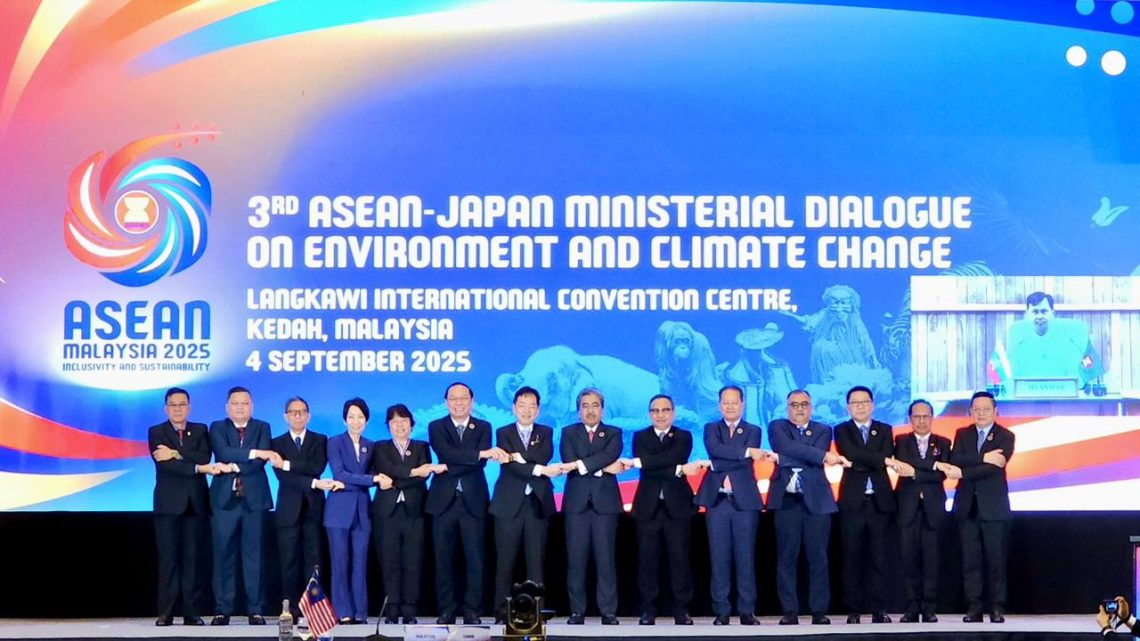
The ASEAN region currently faces a multitude of climate related challenges such as rising sea levels, heatwaves, droughts and other extreme weather events. The effects don’t stop there, where the region faces many socioeconomic challenges such as large economic losses, unemployment, food insecurity, and hunger. ASEAN already experiences some of the world’s most severe and frequent climate-related disasters, and the intensity of these events is increasing faster than global averages. Vietnam, Myanmar, the Philippines, and Thailand are among the top countries in the world to be most affected by climate change in the past 20 years[1]. Rising sea levels, and unpredictable weather patterns are no longer future risks, they are present realities.The socioeconomic consequences are equally severe. Climate change is worsening food insecurity across Southeast Asia by disrupting rice production, damaging fisheries, and increasing the frequency of droughts drying up major river systems. The Asian Development Bank (ADB) estimates the region’s economy could decrease by 11% [2] the end of the century due to the impact of climate change. ASEAN is at the forefront of a climate emergency that threatens not only environmental stability but also long-term economic resilience. Yet, despite facing some of the world’s highest climate risks, ASEAN’s climate response remains constrained by structural barriers: insufficient climate financing, the energy paradox, and a lack of cohesive regional collaboration. These challenges are widening the gap between ASEAN’s climate vulnerability and its climate ambition.
A Severe Funding Crisis Blocking Climate Action
ASEAN has begun taking steps towards strengthening its climate financing, with Singapore emerging as a leader. In 2023, the Monetary Authority of Singapore (MAS) committed $500 million USD in concessional funding to Financing Asia Transition partnership (FAST-P), a blended-finance designed to mobilise private and public capital for decarbonisation and climate resilience of Asia. Several ASEAN members such as Thailand, Indonesia, and Malaysia have joined the Japan-led Asia Emission Community (AZEC), which aims to mobilise US$8 billion[3] by 2030. These initiatives signal a recognition that public budgets alone are inadequate, and that private capital, concessional loans, and international partnerships are essential.
The climate funding gap only worsened fiscal pressures due to COVID-19 pandemic as many initiatives rely heavily on public funding for climate mitigation and adaptation. As a result, there was a reported 70% financing gap[4]. The deficit is immense. Even the ambitious COP29 target of mobilising US$300 billion annually for developing nations by 2035 does little to close the finance gap. The IEA estimates that Southeast Asia will require at least$7 billion USD[5] in finance between 2026 – 2030 to meet its net-zero targets by 2050. The ADB stresses that the region must invest 5%[6] of the region’s GDP until 2030 in climate-resilient infrastructure to meet its target. Yet in 2021, the region only mobilised USD 30 billion[7] in energy investment which is 18% of the USD 170 billion required annually. These numbers don’t only reflect a marginal shortfall, but a major structural deficit. While initiatives like FAST-P and AZEC are steps towards ensuring climate resilience, they remain insufficient. Without deeper regulatory reforms and greater mobilisation of private capital, ASEAN risks falling behind in meeting its net-zero commitments.
The Energy Paradox: Climate Vulnerable Yet Fossil-Fuel Dependent
On paper, ASEAN has an ambitious energy transition to a net-zero economy. The ASEAN Renewable Energy Long-term Roadmap from 2026 – 2030 is a framework which is targeting a 30% share of renewable energy supply by 2030. Member states have pledged to reduce energy intensity by 40% from 2005 levels,[8] expand clean energy capacity and build modern energy systems. Solar capacity is projected to reach 215 GW[9] and onshore wind 115 GW by 2030[10]. These efforts sit alongside broader regional initiatives, including the ASEAN Power Grid, which aims to enhance cross-border electricity trade, and country-level policies such as Vietnam’s PDP8, Singapore’s low-carbon electricity imports, and Indonesia’s JETP framework. The reality is that fossil fuels still dominate the region’s energy reality. Coal remains as the region’s primary major energy source, and the IEA predicts that it will account for almost 40% of the region’s total energy. Abundant domestic reserves -especially in Indonesia, the world’s fifth-largest coal producer – combined with low extraction costs make coal and gas the cheapest and politically convenient options. This is because fossil fuel projects aligns with short political cycles as it delivers immediate capacity, employment, and fiscal revenues while avoiding the complex regulatory reforms and grid upgrades required for large-scale renewable integration.The dependence on fossil fuel energy is reinforced by structural challenges that slow renewable deployment. Many member states lack modern transmission grids capable of integrating large amounts of renewable energy. Moreover, other countries face limited fiscal space, making the upfront costs of solar infrastructure and wind projects to be more expensive than coal. These constraints create uneven progress across the region, as only a handful of countries have been able to successfully accelerate renewable energy investments at scale. These differences create a paradox of vulnerability: ASEAN is one of the world’s most climate-exposed regions, yet continues to expand fossil fuel use and delay transformative transition measures. Furthermore, ASEAN’s diverse political priorities, renewable energy endowments, and power-system constraints have prevented unified action. Each country faces distinct energy security concerns, governance structures, and economic pressures. The divergence slows collective progress while also undermining the credibility of national emission reduction pledges.
Fragmented Climate Governance
Lastly, another major obstacle is the region’s fragmented and uncoordinated approach to climate policy. To this day, only three countries – Singapore, Vietnam, and Indonesia – have submitted their updated Nationally Determined Commitments (NDCs) under the Paris Agreement. The staggered and inconsistent updating of NDCs demonstrates the lack of synchronised regional planning, making it increasingly difficult to build a cohesive ASEAN-wide mitigation trajectory. This fragmentation is compounded by the lack of a central coordinating body with ASEAN authorities to substantively enforce and agree upon binding, joint priorities that harmonise climate standards. Information sharing remains inconsistent and minimal. There is no unified platform which tracks energy deployment, carbon pricing mechanisms and adaptation progress across countries. The gaps in data have demonstrated a lack of transparency, making regional comparisons difficult and hinder evidence-based coordination across the region.
What ASEAN needs to do
Ultimately, ASEAN must accelerate regional energy integration. The ASEAN power grid, long discussed but slow to advance, would allow countries such as Laos and Vietnam to export clean energy to its neighbours. This would lower regional energy costs, reduce dependence on fossil fuels and improve energy security.
The current landscape, where only a handful of countries regularly update their NDCs, creates policy incoherence and slows progress. To stimulate ambitious progress, ASEAN requires a central coordinating body that has the authority to harmonise standards, track emissions, and guide regional projects. More consistent data sharing and climate risk assessments would allow ASEAN to respond to threats that do not respect national borders. For example, rising sea levels are already threatening major cities such as Bangkok, Jakarta and Ho Chi Minh City. These cities face significant risks of flooding as millions of coastal residents and infrastructure are exposed to these climate risks. These reforms require political courage and institutional innovation. Without ASEAN’s climate ambitions, progress will continue to fall behind and will prevent the region from achieving its climate goals. ASEAN is facing a climate emergency that threatens its environmental stability and its long-term economic resilience.
The science is clear, the risks are visible, and the cost of inaction is rising. Regional governments across ASEAN need better implementation, coordination, and courage. Bhutan’s decision to embed environmental protection into law and become the world’s first carbon-negative country, demonstrates how bold, long-term leadership can align national development with climate responsibility. Without similar actions, the gap between ASEAN’s climate ambition and its climate reality is widening. Realistically, closing this gap is no longer a matter of choice, but rather, a matter of survival.
Aanvi Sharma is a third-year student at the University of Toronto, studying in Rotman Commerce in the Economics and Finance stream. She is a Contributor for the Southeast Asia Section and is interested in seeing how other countries in the world specifically in Southeast asian countries are tackling climate change and the impact that the policies/climate change has had on its citizens.
Footnotes
David Eckstein et al., “Global Climate Risk Index 2018,” Germanwatch.org, November 2017, https://www.germanwatch.org/en/14987. ↑
Asian Development Bank, “When It Comes to Fighting Climate Change, Green Is Golden,” Asian Development Bank, March 22, 2023, https://www.adb.org/news/features/when-it-comes-fighting-climate-change-green-golden. ↑
Prapimphan Chiengkul, “Southeast Asia’s Frustration with the State of Climate Finance,” Eco-Business, January 27, 2025, https://www.eco-business.com/opinion/southeast-asias-frustration-with-the-state-of-climate-finance/. ↑
Kevin Zongzhe Li, “A Possible Blueprint for ASEAN’s 2025 Climate Finance Strategy | FULCRUM,” FULCRUM, January 10, 2025, https://fulcrum.sg/a-possible-blueprint-for-aseans-2025-climate-finance-strategy/. ↑
Kevin Zongzhe Li, “A Possible Blueprint for ASEAN’s 2025 Climate Finance Strategy | FULCRUM,” FULCRUM, January 10, 2025, https://fulcrum.sg/a-possible-blueprint-for-aseans-2025-climate-finance-strategy/. ↑
Prapimphan Chiengkul, “Southeast Asia’s Frustration with the State of Climate Finance,” Eco-Business, January 27, 2025, https://www.eco-business.com/opinion/southeast-asias-frustration-with-the-state-of-climate-finance/. ↑
ASEAN Centre for Energy (ACE), “ASEAN Energy Investment 2025 – ASEAN Centre for Energy,” ASEAN Centre for Energy, 2025, https://aseanenergy.org/publications/asean-energy-investment-2025/. ↑
ASEAN Centre for Energy (ACE), “ASEAN Renewable Energy Long-Term Roadmap – ASEAN Centre for Energy,” ASEAN Centre for Energy, October 31, 2025, https://aseanenergy.org/publications/asean-renewable-energy-long-term-roadmap/. ↑
ASEAN Centre for Energy (ACE), “ASEAN Renewable Energy Long-Term Roadmap – ASEAN Centre for Energy,” ASEAN Centre for Energy, October 31, 2025, https://aseanenergy.org/publications/asean-renewable-energy-long-term-roadmap/. ↑
ASEAN Centre for Energy (ACE), “ASEAN Renewable Energy Long-Term Roadmap – ASEAN Centre for Energy,” ASEAN Centre for Energy, October 31, 2025, https://aseanenergy.org/publications/asean-renewable-energy-long-term-roadmap/. ↑