Introduction
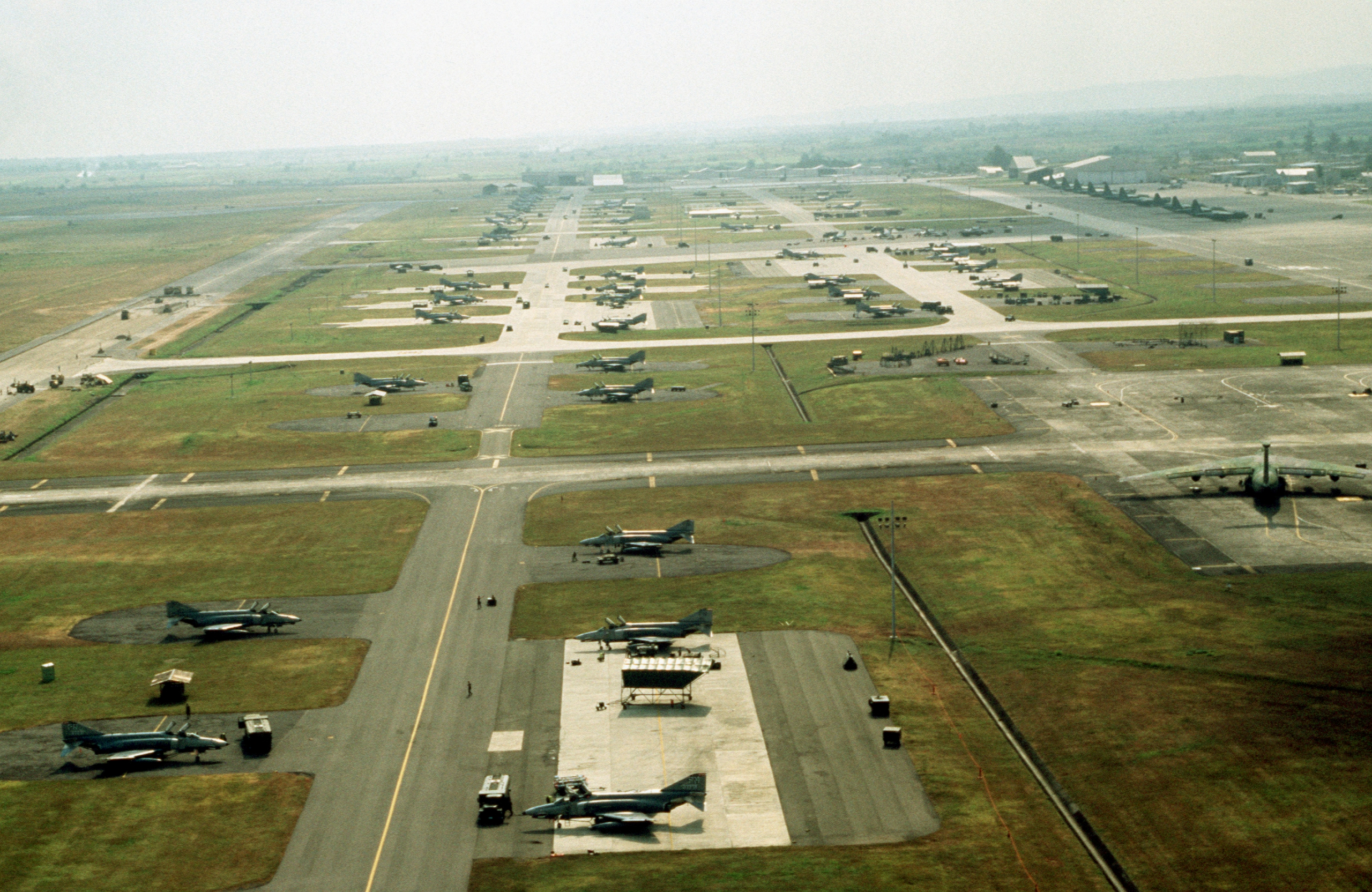
Located in the Philippines, Clark Air Base and Subic Bay Naval Base have historically been the two largest permanent overseas American military installations.[1] From 1903-1992, Clark Air Base was located in Angeles City in the province of Pampanga because of its elevation and proximity to major transport hubs and ports.[2] The United States’ (U.S) overseas presence is publicly framed as serving the purposes of economic or military aid,[3] but arguably, the U.S reaps greater benefit from controlling foreign bases than host countries do. This paper will explore the following questions: 1) what does the history of Clark Air Base reveal aboutwho holds international development expertise, and 2) who does development ultimately serve in contexts like the Philippines?
This paper challenges dominant assumptions about who holds development expertise by analyzing the lived experiences of residents in Pampanga during the US military occupation at Clark Air Base. This study was conducted through an in-depth primary interview with my mother, Joanne Bustamante, who grew up in Angeles City during the base’s operation. When the project was proposed, she did not consider herself an ‘expert.’ Her hesitancy reflects longstanding hierarchies of knowledge often seen in development studies and practice where technocratic, Western actors are treated as a more valuable source of expertise. By centering Joanne’s account and lived experience, this paper adopts a decolonial approach to highlight oral history that is often undervalued in academia.
This paper also responds to a gap in the literature concerning the local Pampangian community’s perceptions of U.S military presence. The interview, supported by secondary literature, reveals that U.S military presence or “aid” largely served American strategic interests over Filipino interests. Moreover, consequences faced were different on local and national levels, exposing a divide between official development narratives and reality.
This paper argues that the case of Clark Air Base reveals that development is not merely the Global North providing development assistance to the Global South, but is instead, a fundamentally unequal system in which the developing world or ‘peripheries’ are exploited to serve the needs of the developed world or ‘core’. Filipino labour in Pampanga played a leading role in sustaining American military operations – contradicting dominant development narratives, and challenging the notion of who truly holds development expertise.
This paper will outline the historical context followed by methodology. The findings are organized around three themes: physical relocation and displacement, types of employment, and local versus national discourse. These findings will then be situated within broader scholarship regarding U.S. bases in Okinawa and Guam before considering future implications for policy and practices.
Historical and Political Context
The Philippines is an archipelago that consists of over 7,000 islands, over 100 dialects and 8 major languages.[4] The Philippines was colonized by Spain in 1521 for over 300 years.[5] In April 1898, the U.S declared war on Spain and by December 1898, the Spanish-American war officially ended with the Treaty of Paris.[6] With the Treaty, Spain had sold the Philippines, Guam, and Puerto Rico to the U.S for $20 million USD ($780,665,061.00 USD as of 2025).[7] The U.S did not formally recognize Philippine independence until 1946, after both World War I and World War II.[8] In this post-World War II period, the U.S. engaged in unprecedented foreign policy action by stationing troops on foreign territory during times of peace.[9] While the Philippines was granted sovereignty, the U.S military remained stationed around the country and kept control over several bases rent-free, liberated from the associated costs with typical colonial rule.[10] What eventually became the Clark Air Base, came to be after the U.S. President Roosevelt signed an executive order in 1903, to establish a permanent base.[11] In 1983, the U.S. and the Philippines negotiated $900 million USD in economic and military aid and then a few years later the Reagan administration requested $100 million USD to Congress in military assistance for the Marcos regime.[12] Around this time, Bustamante explains, that there were an increasing number of protests going on regarding the U.S military presence and anti-American sentiment occurring. In 1991, Mount Pinatubo erupted and coupled with national backlash, the U.S. handed the Clark Air Base land back to the Philippine government and U.S. forces were evicted.[13] After 2000, formal discussions were reinstated to establish a U.S. presence in the Philippines once more, but a temporary one this time.[14] As of 2023, The U.S has access to nine military bases under the justification that this presence will help secure the South China Sea and the Pacific Ocean.[15] The following paragraphs will demonstrate how the American-Philippine relationship is quite unique.
Methodology
The primary data collection for this paper consisted of a 25-minute semi structured open ended interview with Angeles City resident, Joanne Bustamante. The research activity was approved by the uOttawa ethics board for class DVM 3130 with Professor Nadia Abu-Zahra. Questions addressed both research questions and focus on daily life, employment, and community perceptions. The goal was to center lived experience as a valid source of development expertise.
Positionality Statement
As a Filipina Canadian researcher, I hold both insider and outsider perspectives. I did not grow up in Angeles City and my understanding of this history has been shaped by my infrequent visits to the Philippines and pieces of information shared by my family. This unique position informs how I interpret Clark Air Base; I can utilize my mother’s narrative as on-the-ground expertise and analyze it alongside academic literature to redefine preconceived notions of who holds the most valuable development knowledge.
Findings and Discussion
This section presents and interprets the interview findings using inductive thematic analysis. Three major themes emerged: physical relocation, types of employment, and local versus national discourse. Each theme is discussed using interview excerpts and analyzed alongside secondary literature to examine who development ultimately serves and who holds development expertise.
Theme 1: Physical Relocation and Displacement
The interviewee began with explaining that her family had moved to Angeles City, Pampanga, because her father had been hired at Clark. Bustamante recounted, “the only job he could find was becoming a flight instructor at the base… that’s why we moved to Angeles City. Otherwise, we would have stayed in Manila back then”. This demonstrates that Filipino people and their families were relocating to Pampanga specifically to serve American interests. While not explicitly mentioned by the interviewee, it may be inferred that other families seeking employment made the same move to Pampanga to work for the base directly or to work for businesses around the base to serve the Americans indirectly. Bustamante mentions that this was beneficial for her family and other families in the area who were able to find stable employment because of this relocation, but she also recognized that not every Filipino experienced these benefits equally.
This influx of Americans settling in the area and Filipino citizens relocating to serve the U.S. military base may have caused negative externalities that have been evident at other U.S military installments around the world. For instance, Bell et al., found that expected economic benefits of U.S. Troop presence can be offset by increased prices of products, land etc.[16] Due to high American spending in the area, inflation can result in local people no longer being able to afford living in the area.[17] Beyond drastically increasing the cost of living for local populations, U.S. military installations also displaced communities and dispossessed local land. This appears to be a larger pattern across other host countries like Guam, where a third of their land is covered with military installations.[18] Many of these bases are located within Indigenous territory where communities have deep ties to the natural environment.[19] Families have received very little or no compensation for their loss of land or the severe health problems that have resulted with persistent exposure to war activities and environmental or chemical pollutants.[20]
This is all to say that physical relocation, whether perceived as a positive opportunity to serve the U.S. military base, or resulting displacement of Indigenous communities and local populations ultimately does not constitute genuine development for the Global South but instead sustains American economic and militaristic interests.
Theme 2: Types of Employment
Throughout the interview, Bustamante described how her father was employed as a flight instructor at the base, but she also referred to other types of roles the Pampangian locals undertook to serve the U.S base. More generally, she explained that “basically the only people there, of course, were people whose direct livelihood, or indirect livelihood ties to the American base… if you’re not working inside the base, you were providing supplies, or your business is somehow tied to the American base”. Even though the U.S argued that their time at Clark was for economic and military development aid, it appears that the citizens of Pampanga were all serving the base instead. This also reveals that the base would not have been able to run without Filipino labour. Moreover, the work being done by the Filipinos were likely not managerial roles or roles that had upward mobility. Instead, Bustamante explained that after 20 years of service, the U.S. government offered select workers visas to move to the U.S with their families. Rather than investing in long term development, the U.S. granted mobility as compensation for years of service.
Labour connected to the base extended beyond formal employment into highly gendered forms of work. Bustamante discussed the expansion of the Red-Light District and prostitution sector as an informal means of employment for Filipina women to serve the American servicemen. This is not an isolated occurrence at Clark Air Base; sex work is often associated with American Military presence. Bell et al., found that forced sex labour, abuse, and violence against the local sex workers often occurred alongside sex work due to American military presence.[21] As a result of sexual relations between American servicemen and Filipina sex workers, many Filipino mestizos (people of mixed parentage) were born in Angeles City.[22] Moreover, in a study from 1986, 42% of female sex workers in Angeles City were positive for Trichomonas vaginialis infection which is an infection that can lead to vaginitis, urethritis, cervicitis, infertility, and pregnancy complications.[23] Therefore, these findings demonstrate that militarized development produced gendered harms instead of improving well-being. The expansion of prostitution, the exposure to violence, and mental and physical health risks demonstrate that any aid or development related to U.S military installations is a form of extraction. More specifically, Filipina women suffered disproportionate levels of consequences with minimal if any repercussion to American interests or even conversations on this reality.[24] This concentration of reproductive harm and violence among Filipina women remained an unacknowledged cost that sustained the operation of U.S military power. This illuminates how development around U.S military bases continues to benefit the Global North while health risks and other consequences are borne by the Global South.
Theme #3 Local vs. National Discourse
Throughout the interview, Bustamante had explained that there was a high level of excitement from citizens of Angeles City about Clark Air Base. She recalled a prestige associated with American goods, “I remember back then it was a big deal having imported chocolates and imported U.S. made food because it was a status symbol, I suppose, because, they’re made in USA, Hershey’s whatever, I mean, it’s…it was fancy, I mean, compared to local brands”. She explained that there are different perspectives on what Clark meant because the base provided livelihood and as a small town many people were grateful that the U.S. provided employment opportunities. She continued to emphasize that the benefits felt by her and her family were not equally felt, “compared to other cities and towns around the Philippines, we were better off, yes, on one hand and on the other hand, like, I mean, everything revolved around the Americans”. Furthermore, there were many negative externalities that she remembered such as an increase in crime, increase in drug dealing/consumption, increase of guns/circulation of weapons, an increase in prostitution, and a black market that had blossomed from American military personnel reselling American goods they purchased inside the base. Bustamante’s claims are echoed by scholars such as Hikotani et al., who researched local perceptions of another U.S. military host city Okinawa, Japan. They found that the local population held negative attitudes towards the American presence due to an increase of crime, environmental degradation, and noise pollution. [25] Hikotani et al., shed light on the importance of local opinions to properly inform foreign policy analysis when contributing to the scholarly debate on U.S. military presence in foreign territory.[26] Similar to this paper, Bustamante and Hikotani et al., urge that local opinion can be drastically different from national perceptions but these local communities are key stakeholders in understanding American military development practices.[27] Moreover, Bustamante voiced her frustration with U.S. hypocrisy and actions that have directly gone against the interests of the Filipino people:
“I mean, it’s just, if it’s aid, it’s like charity, right? They’re giving you charity. Whereas if it’s rent, you’re the landlord, and you have more control over the tenants that you have, whereas, if it’s you’re dependent upon their graciousness. So yes, that’s one of the reasons why we weren’t happy that we were America’s puppets. They’re like, ‘Oh, what about our independence? You tell us what to do every time.’ And at the same time, they’re supposed to be for democracy and everything. They were behind Marcos. The Marcos regime, which is known far and wide, was one of the greatest dictators. I mean, Marcos was a notorious dictator in the Philippines. He ruled for 20 years, and he was like Castro. I mean, you’re supposed to be the beacon of democracy. You help this strong man, this dictator, rule over the Philippines for 20 years”
– Joanne Bustamante
Her critique illustrates that Clark functioned less as development aid for Filipinos, but instead as a system that perpetuated dependency relations by sustaining American political and military interests. It functioned as a mechanism that expanded U.S influence – both directly and indirectly – by reinforcing American control and simultaneously accommodating rather than contesting Marcos’ authoritarian rule. Bustamante’s local knowledge and lived experiences expose contradictions in official foreign policy and development narratives. This reinforces that military and economic development at Clark served the U.S. while infringing on Philippine sovereignty and well-being.
Conclusion
This study is limited in scope and draws on a single in-depth interview and a specific case study. However, it highlights the need for more research that views local knowledge as a form of development expertise. Bustamante’s interview revealed insights that are not often discussed, which demonstrates that there are large gaps in the data used to draft development policy. As Hikotani et al also argue, local perceptions are crucial for understanding the true consequences of these development structures and Western dominance.[28] The findings and analysis of this paper reveal that in contexts like Clark Air Base, it is a system by which the Global South serves the interests of the Global North as a result of its dependent relationship. Local communities were relocated and were displaced to suit American needs, Philippine citizens worked directly and indirectly to serve the base, with Filipina sex workers facing the most dangerous of consequences – all while the U.S. supported the Marcos dictatorship that also existed to undermine Philippine democracy. Development at the Clark Air Base did not support Filipino sovereignty nor strengthen autonomy, but instead, it continued a cycle of dependency under the guise of benevolence and humanitarian aid. Finally, the interview also showcases Filipino resilience; Bustamante reflected that the U.S. departure created an opportunity for growth and how the Philippines “rose from the ashes” of Mount Pinatubo’s eruption. In short, this research calls for development practice, policy, and research to reconsider the value of local knowledge and expertise and to rethink who development truly serves.
Rhiannon Careri is a fourth-year student at the University of Ottawa studying Honours International Development and Globalization and is currently working at Health Canada as a Junior Policy Analyst. She was a Guest Author for Synergy‘s Fall Cycle in 2025. As a Filipina Canadian woman, Rhiannon has always been interested in calling attention to lived experiences of marginalized groups to inform policy and research. Her previous research study focused on how undergraduate students in development studies at uOttawa perceive the current integration of Indigenous content within their curriculum. Rhiannon presented this work at the Canadian Association for the study of International Development Conference (CASID 2025) and the work will be published in the sixth issue of Ignio. Her main areas of research are women’s health rights, social determinants of health, evidence-based policy, and decolonizing development methodology and practice.
Bibliography
Bacho, Peter. “Hearts and Minds in the Philippines.” SAIS Review (1956-1989) 6, no. 1 (1986): 61–74.
Bell, Sam R., K. Chad Clay, and Carla Martinez Machain. “The Effect of US Troop Deployments on Human Rights.” Journal of Conflict Resolution 61, no. 10 (November 1, 2017): 2020–42. doi:10.1177/0022002716632300.
“Clark Air Base History.” Accessed December 5, 2025. http://www.clarkab.org/history/.
Crabb, Lauren, Celal Cahit Agar, and Steffen Böhm. “Internal Colonialism as Socio-Ecological Fix: The Case of New Clark City in the Philippines.” Antipode 56, no. 4 (2024): 1233–63. doi:10.1111/anti.13015.
Ganser, Leilani Rania. “Opinion | From Galapagos to Guam: US Military Bases Are a Threat to Local Communities | Common Dreams,” 2019. https://www.commondreams.org/views/2019/06/20/galapagos-guam-us-military-bases-are-threat-local-communities.
Hikotani, Takako, Yusaku Horiuchi, and Atsushi Tago. “Revisiting Negative Externalities of US Military Bases: The Case of Okinawa.” International Relations of the Asia-Pacific 23, no. 2 (May 1, 2023): 325–49. doi:10.1093/irap/lcac002.
“History of the Philippines.” Accessed December 5, 2025. https://www.csub.edu/pacificrim/countryprospectus/history.htm.
Lafferty, Eliza Faye. “CONTROL WITHOUT THE COSTS OF CONQUEST: REIMAGINING U.S. MILITARY BASES IN THE PHILIPPINES.” Georgetown Journal of International Law 55, no. 2 (January 1, 2024): 305–46.
Lema, Karen. “Philippines Reveals Locations of 4 New Strategic Sites for U.S. Military Pact.” Reuters, April 3, 2023, sec. Asia Pacific. https://www.reuters.com/world/asia-pacific/philippines-reveals-locations-4-new-strategic-sites-us-military-pact-2023-04-03/.
Ong, Vanissa A., and Windell L. Rivera. “Prevalence of Trichomonas Vaginalis in Vaginal Swabs from Sex Workers in Angeles City, Pampanga, Philippines as Detected by PCR.” Tropical Medicine and Health 38, no. 1 (2010): 29–34. doi:10.2149/tmh.2009-17.
Footnotes
Crabb, Agar, and Böhm, “Internal Colonialism as Socio-Ecological Fix.” ↑
Bell, Clay, and Martinez Machain, “The Effect of US Troop Deployments on Human Rights.” ↑
Bell, Clay, and Martinez Machain, “The Effect of US Troop Deployments on Human Rights.” ↑
Crabb, Agar, and Böhm, “Internal Colonialism as Socio-Ecological Fix.” ↑
Lema, “Philippines Reveals Locations of 4 New Strategic Sites for U.S. Military Pact.” ↑
Bell, Clay, and Martinez Machain, “The Effect of US Troop Deployments on Human Rights.” ↑
Bell, Clay, and Martinez Machain, “The Effect of US Troop Deployments on Human Rights.” ↑
Ong and Rivera, “Prevalence of Trichomonas Vaginalis in Vaginal Swabs from Sex Workers in Angeles City, Pampanga, Philippines as Detected by PCR.” ↑
Hikotani, Horiuchi, and Tago, “Revisiting Negative Externalities of US Military Bases.” ↑